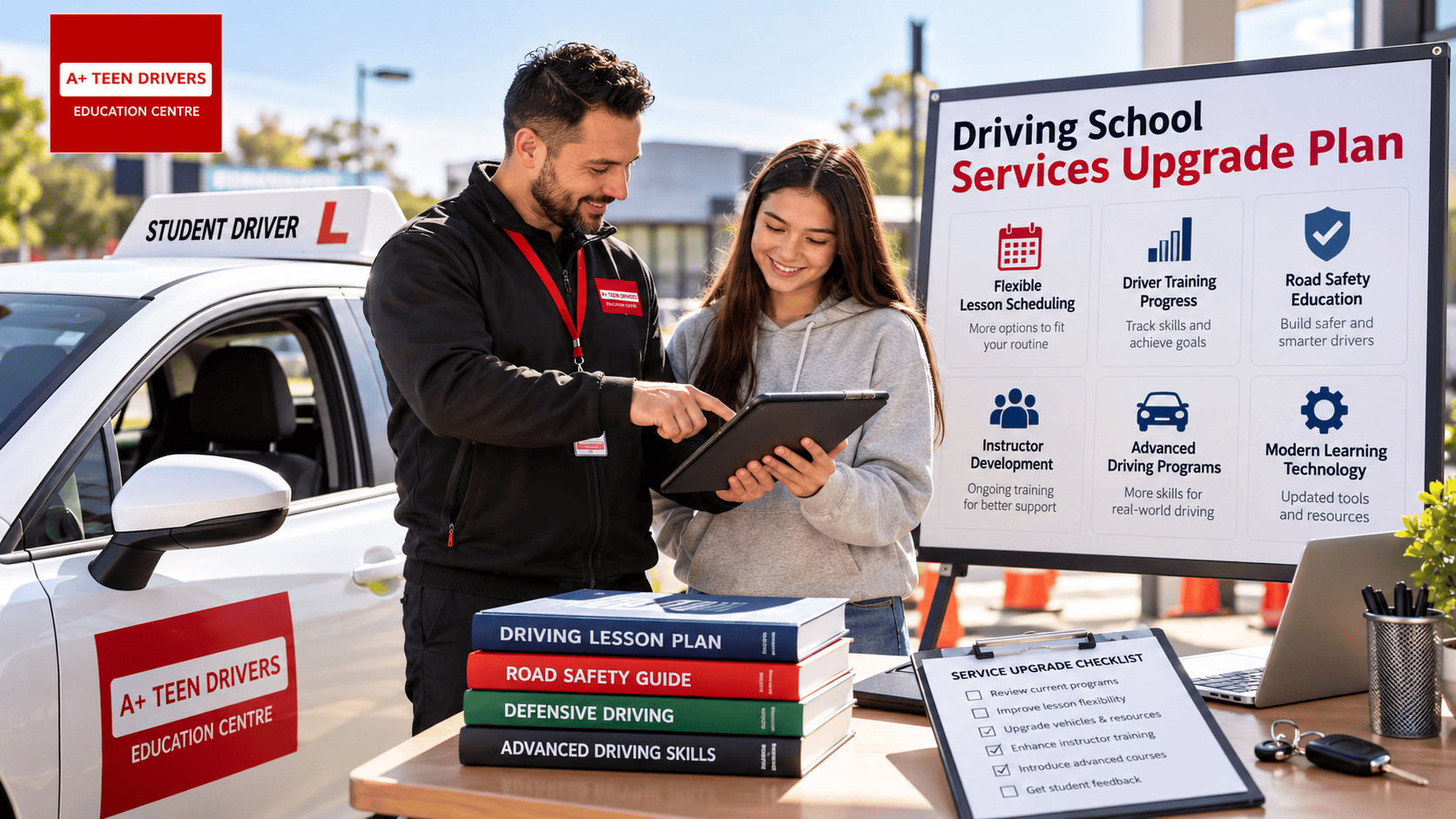
Learning to drive is about much more than remembering road signs, operating pedals, or passing a driving test. A learner may understand the basic rules but still feel nervous when merging into traffic, changing lanes, approaching a busy intersection, or driving somewhere unfamiliar.
That is where professional instruction can make a meaningful difference. A good instructor does not simply tell a learner what to do. They observe how the learner responds to real road situations, identify weak areas, explain why certain techniques matter, and gradually introduce more challenging situations.
For anyone looking for a Driving School On St Clair Ave, understanding this approach can help you choose lessons based on genuine learning rather than simply the number of hours behind the wheel.
A strong beginner driving experience should help learners become increasingly independent. The goal is not to have an instructor constantly correcting every movement. It is to develop the observation, judgement, control, and decision-making skills that allow a driver to handle situations safely without relying on someone sitting beside them.
Why Confidence Matters When Learning to Drive
Confidence and competence are closely connected, but they are not the same thing.
An overconfident learner may take unnecessary risks because they believe they have mastered driving before they have developed enough experience. On the other hand, a nervous learner may have good technical skills but hesitate when faced with unfamiliar traffic conditions.
Professional instruction aims to develop calm, informed confidence.
A learner should eventually be able to:
This is one reason structured driving lessons are valuable during the early stages of learning. Repetition creates familiarity, while instructor feedback helps prevent poor habits from becoming established.
How a Driving School Creates a Structured Learning Process
A learner’s progress is easier to manage when driving skills are introduced progressively.
A professional driving school typically builds lessons around the learner’s current ability rather than immediately placing them in the most difficult traffic conditions.
For example, a new learner might begin with:
This progression matters because driving involves several tasks happening simultaneously. A beginner who is still concentrating heavily on steering may struggle to observe pedestrians, signs, mirrors, and surrounding vehicles at the same time.
An instructor can therefore introduce one skill at a time and gradually combine them.
Why Gradual Progression Works
Imagine a learner who has only driven on quiet residential streets being asked to navigate a busy multi-lane road immediately.
The learner may know how to steer and brake, but their mental workload can become overwhelming. They may miss a road sign, check mirrors too late, or become uncertain about lane positioning.
Instead, an instructor can build the learner’s ability in stages. Once basic vehicle control becomes more automatic, attention can shift towards traffic awareness and decision-making.
That is an important part of effective driving training.
What Professional Instructors Notice That Learners Often Miss
One of the biggest advantages of professional instruction is having another trained person observe the learner’s driving.
Learners often concentrate on obvious mistakes. An instructor looks for patterns.
For example, a learner might think:
“I keep making mistakes when changing lanes.”
An instructor may identify the underlying issue as something more specific: checking mirrors too late, failing to establish a consistent mirror routine, maintaining an unsuitable speed, or becoming distracted by vehicles in the blind spot.
Correcting the underlying behaviour is more useful than simply telling the learner to “be careful.”
Professional instructors may also notice:
These observations can turn a frustrating lesson into a practical learning opportunity.
Building Skills Through Driving Lessons St Clair Ave
Local road experience is important because learners eventually need to apply general driving principles in their own environment.
Driving lessons St Clair Ave can expose learners to different road conditions and traffic patterns while allowing an instructor to guide them through situations that may initially feel challenging.
For example, a learner may encounter:
The value is not simply driving along St Clair Avenue. It is learning how to read the environment around the vehicle.
A professional instructor can ask a learner to explain what they see and what they expect to happen next. This encourages active observation instead of passive driving.
Developing Better Hazard Awareness
Consider approaching an intersection where the traffic light is green.
A beginner may simply think, “The light is green, so I can continue.”
An experienced driver considers more information:
This type of thinking develops gradually through driving classes St Clair Ave and repeated real-world practice.
The Role of Feedback During Driving Training
Feedback is most useful when it is specific.
“Drive better” does not tell a learner what to change.
“Start checking your mirrors earlier before moving into the next lane” gives the learner something concrete to practise.
Professional instructors can provide feedback in several ways:
Immediate Correction
If a learner is about to make an unsafe decision, the instructor can intervene immediately.
This protects the learner while also creating a teachable moment.
Post-Action Feedback
Sometimes it is better to let the learner complete a safe manoeuvre before discussing it.
For example, after a lane change, the instructor might explain that the learner checked the mirror correctly but waited too long to indicate.
This helps separate the individual components of the manoeuvre.
Pattern-Based Feedback
If the same issue appears repeatedly, the instructor can create a targeted exercise.
Suppose a learner repeatedly approaches turns too quickly. Rather than mentioning the problem after every turn, the instructor can spend part of a lesson working specifically on speed management before corners.
That approach makes driving training more deliberate and measurable.
How Instructors Help Nervous Learners
Nervousness is common among new drivers. It does not necessarily mean someone lacks the ability to drive.
A learner may become anxious because they are worried about making mistakes, dealing with impatient drivers, controlling the vehicle, or remembering everything at once.
A good instructor can reduce unnecessary pressure by breaking difficult tasks into manageable steps.
For example, instead of asking a nervous learner to immediately navigate a complicated route, the instructor may:
This creates a more controlled beginner driving experience.
Confidence Should Come From Competence
Confidence should not mean believing that nothing can go wrong.
A safer form of confidence comes from knowing how to respond when something unexpected happens.
For example, if another driver changes lanes unexpectedly, a confident learner is more likely to:
Professional instruction can help learners practise this type of response before they encounter similar situations alone.
Learning to Make Decisions Without Constant Prompts
One common problem during early lessons is prompt dependency.
A learner may perform well when the instructor says:
“Check your mirror.”
“Slow down.”
“Prepare for the turn.”
But independent driving requires the learner to recognise those situations without being told.
This is why instructors should gradually reduce verbal assistance.
During early lessons, frequent guidance may be appropriate. Later, the instructor can provide fewer instructions and allow the learner to plan the route and make decisions independently.
This transition is an important part of effective driving lessons Toronto St Clair.
The instructor is essentially moving from active guidance towards observation and assessment.
Practical Scenarios Where Professional Instruction Helps
Real-world examples often explain the value of instruction better than theory alone.
Scenario 1: Changing Lanes in Heavy Traffic
A learner sees an opening and immediately starts moving towards it.
The instructor teaches them to establish a consistent sequence involving observation, signalling, checking the relevant area, assessing speed differences, and moving only when the manoeuvre is safe.
Repeated practice helps turn the sequence into a habit.
Scenario 2: Approaching a Busy Intersection
A learner focuses on the traffic signal but overlooks a pedestrian waiting near the crossing.
The instructor explains that scanning should include the entire intersection rather than only the traffic light.
The learner practises approaching similar intersections while actively identifying potential conflicts.
Scenario 3: Parking Under Pressure
A learner can park successfully in an empty area but becomes uncomfortable when other vehicles are waiting.
The instructor helps them focus on the manoeuvre rather than the pressure created by surrounding drivers.
The learner learns that taking an appropriate amount of time to complete a safe manoeuvre is more important than reacting to impatient behaviour.
Scenario 4: Making a Small Mistake
A learner takes the wrong lane and becomes flustered.
Instead of panicking, the instructor demonstrates how to continue safely, reassess the route, and correct the situation at the next suitable opportunity.
This teaches an important lesson: a driving mistake does not automatically require an immediate correction.
Sometimes the safest response is to continue calmly and make a planned adjustment.
Common Mistakes Learners Make
Even motivated learners can develop habits that make driving more difficult.
Focusing Too Close to the Vehicle
Beginners often stare at the road immediately in front of the car.
This limits their ability to anticipate what is happening further ahead.
Developing a wider visual scan gives drivers more time to react.
Checking Mirrors Without Understanding Why
Mirror checks should support decision-making. Simply looking at a mirror because it is part of a memorised sequence is less useful than understanding what information the mirror provides.
Driving at the Wrong Speed for the Situation
A posted speed limit is important, but appropriate speed also depends on conditions.
Rain, congestion, visibility, road layout, pedestrians, and parked vehicles can all affect how a driver should approach a situation.
Becoming Overwhelmed by Minor Errors
Learners sometimes continue thinking about a mistake several minutes after it happened.
That can create another problem because their attention is no longer fully focused on the road.
An instructor can help learners acknowledge the error, understand what caused it, and return their attention to the present situation.
Relying Too Heavily on the Instructor
If a learner waits for instructions before making every decision, they may struggle when driving alone.
Lessons should therefore progressively encourage independent observation and decision-making.
Expert Tips for Getting More From Your Driving Lessons
Learners can improve the value of each lesson by preparing mentally before getting into the vehicle.
Set One or Two Specific Goals
Instead of trying to improve everything at once, choose a small number of priorities.
For example:
Focused practice makes progress easier to recognise.
Ask Why, Not Just What
If an instructor tells you to slow down, ask yourself why.
Was the road narrowing? Was visibility limited? Were pedestrians nearby? Was traffic building?
Understanding the reasoning helps you transfer the lesson to unfamiliar situations.
Review Mistakes Without Dwelling on Them
After a lesson, identify two or three things that need improvement.
Then think about what you will do differently next time.
The objective is not to create a list of failures. It is to turn mistakes into specific learning points.
Practise Observation
Even when you are not driving, you can observe how traffic behaves.
As a passenger, consider:
This can reinforce your understanding between lessons.
How to Choose a Driving School On St Clair
Choosing a Driving School On St Clair should involve more than comparing lesson prices.
Consider how the instructor teaches.
Useful questions include:
The right learning environment can make a substantial difference because driving is a skill that develops through observation, repetition, correction, and gradually increasing independence.
What a Good Beginner Driving Experience Should Feel Like
A productive beginner driving experience will not necessarily feel easy every time.
Some lessons may feel comfortable because familiar skills are improving. Others may feel challenging because a new road environment or manoeuvre has been introduced.
That is normal.
The important question is whether the challenge is productive.
A useful lesson should leave the learner with a clearer understanding of:
Progress is rarely perfectly linear. A learner may perform a manoeuvre well one day and struggle with it the next. That does not necessarily mean they have lost progress. Fatigue, traffic, weather, unfamiliar roads, and mental workload can all affect performance.
Final Thoughts
Professional instructors contribute much more than basic vehicle instruction. They help learners develop the judgement and awareness needed to manage real traffic situations.
From driving lessons St Clair Ave to more advanced road practice, structured instruction can help learners move from simply controlling a vehicle towards understanding the environment around it.
The most valuable outcome of a beginner driving experience is not simply completing a certain number of lessons. It is developing habits that continue to support safer decision-making after formal instruction has ended.
For learners considering a Driving School On St Clair or Driving School On St Clair Ave, look for an approach that combines practical road experience, constructive feedback, progressive skill development, and increasing independence. Those elements provide a stronger foundation for becoming a capable and confident driver.
Frequently Asked Questions
1. How do professional driving instructors build confidence in beginner drivers?
Professional instructors build confidence by introducing skills progressively, giving specific feedback, and allowing learners to repeat challenging situations. They also gradually reduce assistance so learners learn to make decisions independently rather than depending on constant prompts.
2. Are driving lessons useful if I already know the basics?
Yes. A learner may understand basic vehicle control while still having weaknesses in observation, positioning, hazard awareness, or decision-making. Professional assessment can identify these less obvious issues and provide targeted practice.
3. How can I make driving lessons St Clair Ave more effective?
Set one or two goals before each lesson, listen to the reasoning behind instructor feedback, and review mistakes afterwards. Ask questions when you do not understand why a particular action was recommended. Focused practice generally produces more useful learning than trying to improve everything simultaneously.
4. Why do some learners become nervous when driving in busy traffic?
Busy traffic increases the amount of information a beginner must process at once. Vehicles, pedestrians, signs, lane markings, signals, and speed changes can create a high mental workload. Gradual exposure helps learners process these elements more comfortably over time.
5. What should I look for when choosing a Driving School On St Clair Ave?
Look for an instructor who provides structured progression, clear explanations, practical feedback, and opportunities for independent decision-making. A good learning environment should help you understand not only what to do, but also why a particular driving decision is appropriate.


How Many Driving Lessons Do You Need Before Your G2 Test in Toronto?
How Professional Driving Instructors Help Build Confident Drivers

How to Choose the Best Driving School on St Clair: A Complete Guide


 Trustindex verifies that the original source of the review is Google.
  Trustindex verifies that the original source of the review is Google.
  Trustindex verifies that the original source of the review is Google.
 Trustindex verifies that the original source of the review is Google.
  Trustindex verifies that the original source of the review is Google.
  Trustindex verifies that the original source of the review is Google.
  Trustindex verifies that the original source of the review is Google.
  Trustindex verifies that the original source of the review is Google.
  Trustindex verifies that the original source of the review is Google.