Your teen just passed the G1 knowledge test. They feel ready. You feel nervous. That gap is normal, and it is exactly where good driving lessons Toronto instructors deliver make the biggest difference.
Toronto is one of the hardest places in Canada to learn to drive. Streetcars share lanes with cars. Cyclists appear from bike lanes at every corner. Drivers merge fast on the Gardiner and the DVP. A teen who learns only from a parent often picks up the parent’s habits, good and bad. That is why so many families now look for High Quality Teen Driving Classes Toronto before their teen takes the wheel alone.
At A Plus Teen Drivers, we train teenagers on these exact roads every week. This guide explains why professional training matters, what a strong program includes, and how to spot Affordable teen driving classes Toronto families can trust without cutting corners on safety.
Ontario uses a graduated licensing system. A new driver moves from G1 to G2 and then to a full G licence. Each stage adds more freedom and more responsibility.
A G1 driver must wait 12 months before taking the G2 road test. Teens who complete a Ministry-approved Beginner Driver Education (BDE) course can test after just 8 months. That course includes at least 40 hours: 20 hours of classroom or online theory, 10 hours of in-car training and 10 hours of flexible learning.
The time saving is useful. But the real value of a beginner driver course sits in what a teen learns during those hours. Four months earlier means little if the skills behind it are weak.
Parents teach with love. Instructors teach with a plan. Both matter, but they do different jobs.
Professional instruction builds skill step by step. A teen starts in quiet streets, learns mirror checks and smooth braking, and only then moves to busy roads. Parents often skip steps because the drive “went fine yesterday.” Good instructors never skip the basics, because small gaps turn into big mistakes later.
Most experienced drivers have habits they no longer notice. Rolling stops. One-hand steering. Late shoulder checks. Teens copy what they see. A trained instructor catches these habits in the first session and corrects them before they stick.
Our training cars have a second brake on the instructor’s side. This lets a teen practise real situations, like a left turn across busy traffic, with a safety net in place. It also lowers stress for the student, so they learn faster.
Generic training does not fully prepare a teen for this city. Strong driver training Toronto programs focus on local hazards:
Here is one detail many parents do not know. G1 drivers cannot use 400-series highways or high-speed expressways like the Gardiner and DVP unless a licensed driving instructor rides with them. This makes professional sessions the only legal way for many teens to practise highway driving before G2.
At A Plus Teen Drivers, teen driver development follows three clear stages. Each stage builds on the last.
Think of a typical student we’ll call Maya, a 16-year-old from the west end. She could steer and brake well after practising with her dad. But she froze at busy left turns. Her instructor broke the turn into three steps: position, scan and commit. After four focused sessions, she handled the turn at a busy Bathurst intersection without hesitation. Situations like this show what High Quality Teen Driving Classes Toronto should deliver: targeted coaching, not just logged hours.
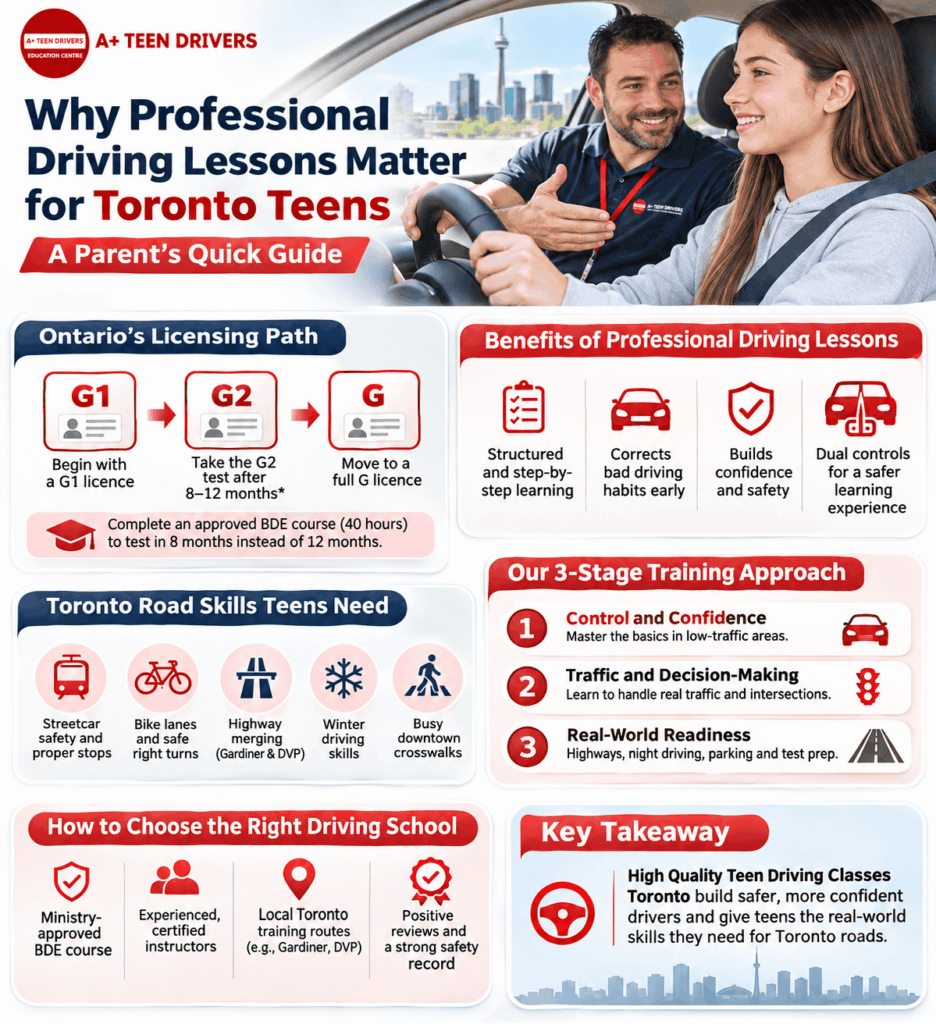
Good value means real skill, not just a finished course. A weak program often leads to failed road tests, repeat lessons or unsafe habits. Use these checks before you sign up:
Families often make the same few errors when planning teen driver training.
“My teen can learn everything from me.” Parent practice is essential, but it works best alongside professional lessons. Instructors give structure. Parents give extra hours. Together, they produce a much stronger driver.
“Lessons are only for passing the test.” The road test lasts well under an hour. Good driving lessons Toronto teens take should prepare them for a lifetime on the road. The goal is a safe driver, not just a licence.
“More lessons always mean a better driver.” Quality beats quantity. Ten focused hours with clear goals often achieve more than twenty unplanned ones.
“We’ll book lessons a week before the test.” Last-minute lessons fix test nerves, not deep habits. Start early so skills have time to settle.
These tips come from years of driver training Toronto teens on real city streets:
Your teen’s first years behind the wheel shape how they drive for decades. Good driver training Toronto teens receive gives them structure, local knowledge and safe habits that parent practice alone rarely builds.
Choosing High Quality Teen Driving Classes Toronto means choosing training that works the first time. The right program teaches city-specific skills, prepares teens for highways legally and safely, and builds real confidence.
Strong driving lessons Toronto families choose today also save time later, with fewer repeat sessions and a calmer road test.
At A Plus Teen Drivers, we offer Affordable teen driving classes Toronto teens enjoy and parents trust. When your teen is ready to start, our team is here to guide them from their first lesson to their road test.
Your teen can start driving lessons once they turn 16 and pass the G1 knowledge test. Many families enrol right after the G1, because early training stops bad habits before they form. We usually recommend booking the beginner driver course within the first few months. This gives your teen enough time to complete the in-car hours, practise with family and reach the 8-month G2 eligibility point comfortably prepared.
An approved BDE course includes 10 hours of in-car professional driver instruction. For many teens, those hours plus regular family practice are enough. Some students need extra sessions for specific skills, such as parallel parking or busy left turns. Our instructors assess each teen and recommend extra time only when a real skill gap exists. Combine lessons with steady practice for the best and most reliable result on test day.
Book a first lesson and watch how your teen feels afterwards. A good instructor explains each step before the student tries it, speaks calmly and never rushes a nervous learner. Ask the school how they handle anxiety, such as starting in quiet streets or repeating a skill until it feels easy. If your teen comes home more confident, not more stressed, you have likely found the right fit.
A G1 driver cannot drive on 400-series highways or high-speed expressways like the Gardiner Expressway or the Don Valley Parkway. The one exception applies when the accompanying driver is a licensed driving instructor. This means professional lessons give teens their only legal chance to practise highway merging before the G2. We introduce highway driving only after a student shows steady control on busy city roads.
Your teen should bring their valid G1 licence, comfortable flat shoes and glasses or contact lenses if their licence requires them. Ask them to get a good night’s sleep and eat before the lesson, as focus drops quickly when tired or hungry. They don’t need any prior driving experience. Our instructor starts with car set-up and basic controls, so the first lesson feels calm, simple and safe.

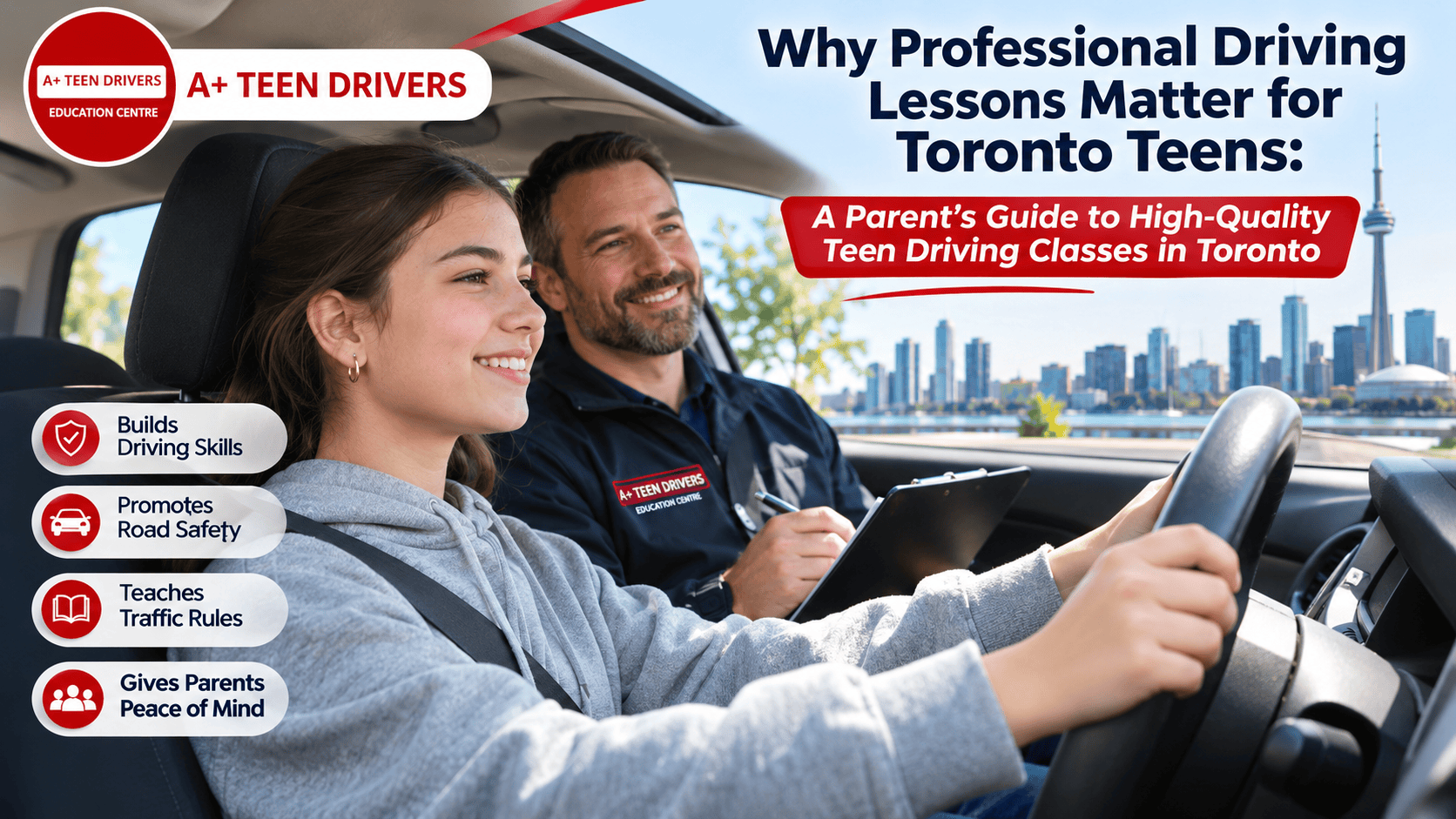
Why Professional Driving Lessons Matter for Toronto Teens: A Parent’s Guide to High-Quality Teen Driving Classes in Toronto
How Many Driving Lessons Do You Need Before Your G2 Test in Toronto?
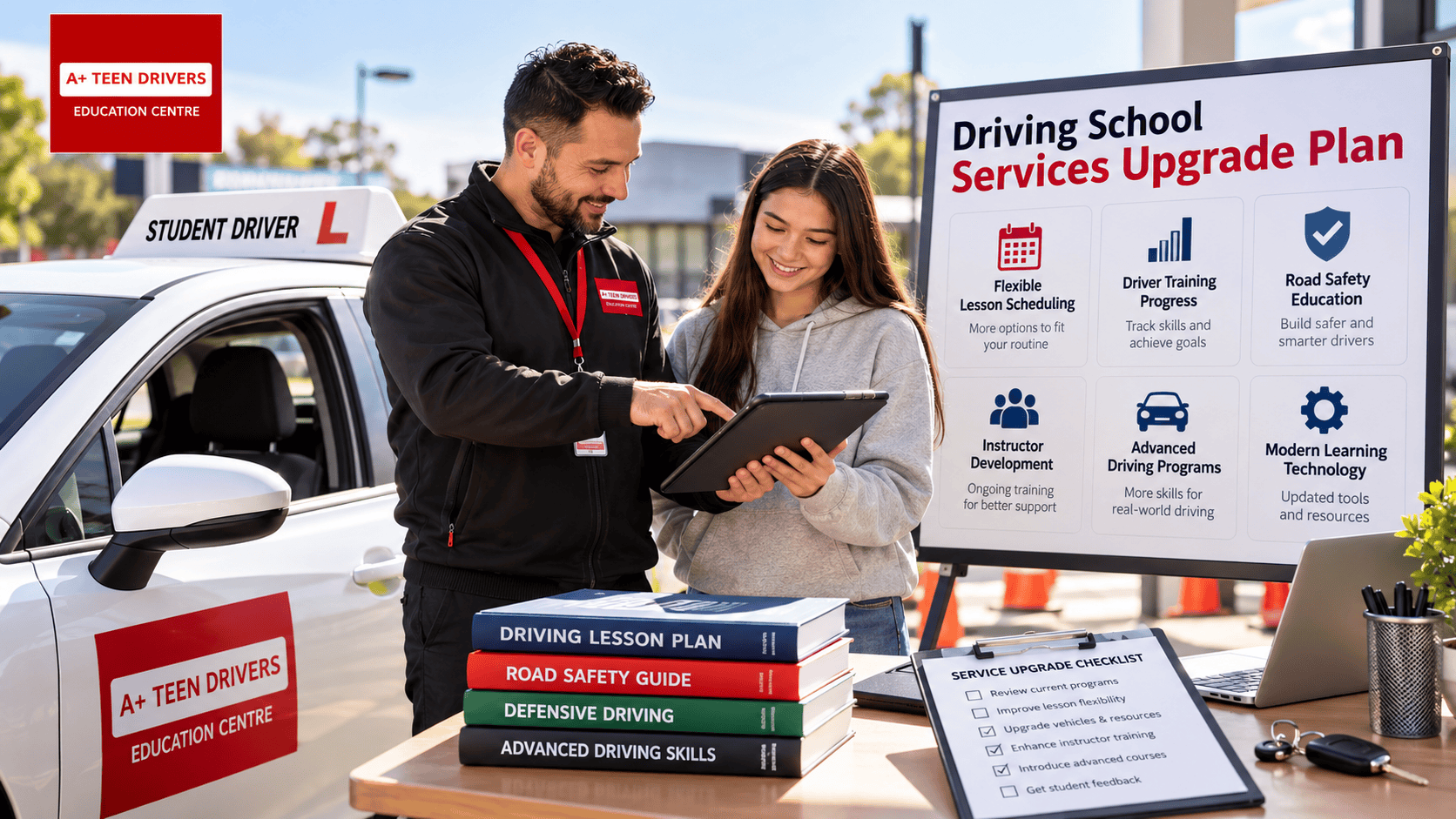
How Professional Driving Instructors Help Build Confident Drivers


 Trustindex verifies that the original source of the review is Google.
 Trustindex verifies that the original source of the review is Google.
 Trustindex verifies that the original source of the review is Google.

 Trustindex verifies that the original source of the review is Google.
 Trustindex verifies that the original source of the review is Google.
 Trustindex verifies that the original source of the review is Google.
 Trustindex verifies that the original source of the review is Google.
 Trustindex verifies that the original source of the review is Google.
 Trustindex verifies that the original source of the review is Google.